SPLASH: Joint Sensing, Communication and Control of Aerial Vehicles
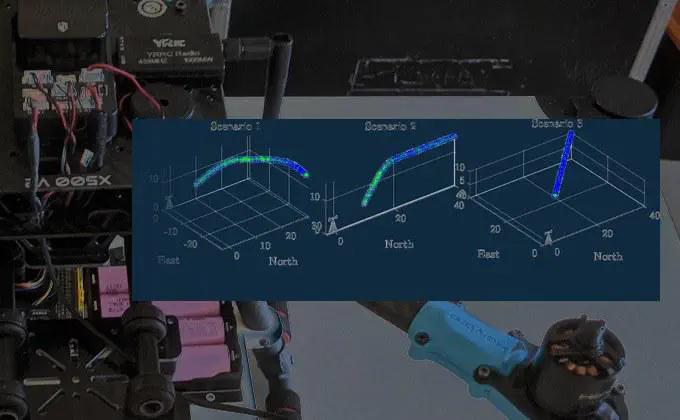 SPLASH: joint sensing, communication and control for U-Space
Project Overview
SPLASH (Signal Processing for physicaL-lAyer design of joint Sensing, communication, and control of aerial veHicles) is an industrial research contract between the Industrial Systems Institute of ATHENA RC and the Hellenic U-Space Institute (HUSI). As Principal Investigator, I lead ATHENA’s work on one question: how drones sharing low-altitude airspace can sense their surroundings, keep their communication links and stay under control, using the same radio hardware.
The project started in September 2023 and was extended in 2026.
Research Tasks
Detect-and-avoid with camera and mmWave radar fusion Fusing camera images with mmWave radar detections, so a drone can spot and avoid other aircraft and obstacles in conditions where either sensor alone is unreliable.
Control and communication co-design Designing the flight controller and the wireless link together, so that manoeuvres do not break the link and the link quality is taken into account when the drone plans its motion.
FMCW joint sensing and communication Using FMCW radar waveforms for both sensing and data transmission, so one radio front end serves both functions.
Impact
SPLASH supports HUSI’s U-Space activities, feeds the work of the EUSOME Excellence Hub, and informs ATHENA’s input to ETSI ISG ISAC on integrated sensing and communication for low-altitude airspace.
Funded by the Hellenic U-Space Institute (HUSI) under an industrial research contract (€45,000, 2023–2027).

Dr. Evangelos Vlachos
Tenure-track Researcher
My research focuses on Cyber-Physical Systems, UAVs, and 6G networks, bridging the gap between theory and real-world implementation.